Ok, let me begin by asking forgiveness for my nerdsplosion in this entry. You were warned.
Even though I grew up speaking two languages (and two other dialects), in my relationship with God, we've only communicated in Chinese on the rare occasion. (Usually that involves God REALLY trying to get my attention).
But to give a little variety to my lectionary readings, I decided this morning I was going to read in Chinese.
Talk about contextualizing.
Even though I'm fluent in both languages, my command of the Chinese vocab is limited to day-to-day communication. Sprinkle in a few spiritual terms and a few of the Chinese classic phrases or idioms and I get thrown for a loop.
Part of the problem is that I only understand the Chinese classic phrases because of the TV shows I watched growing up. Words like 公义 (which translates quite literally as public/community righteousness/justice) as used in Isaiah 61:10, or 差遣 (which means to send on a mission) as used in Galatians 4:4.
It isn't that I didn't understand the words as I was reading. It was more that I hardly read or hear these words outside of the context of the ancient Chinese royal courts as seen in TV shows. Sure, I come across the words "righteousness" and "justice" in theology everyday. But when I read 公义, I think of the Emperor 乾隆 (Qian Long) made famous by the 還珠格格 TV series about the long-lost daughter of Emperor 乾隆 who was born to a peasant whom the Emperor had an affair with on one of his incognito trips out to the country. The story revolves around 紫薇 (the "princess") trying to make her way back to the palace to be reconciled to her father after her mother dies. Along the way, she runs into 小燕子 (a peasant girl called Little Swallow). Because the journey is long and tiring, and 紫薇's body is too weak, she convinces 小燕子 to make the rest of the journey for her to tell the Emperor her story.
The plot thickens when the Emperor mistakes Little Swallow for his daughter. The thing that sticks out to me about this story is that while I'm not sure whether the whole 還珠格格 story is fact or fiction, the Emperor 乾隆 is known to be one of the more well-liked Emperors of China. He is portrayed in the story to be a righteous man, but still merciful after he finds out that Little Swallow is not actually his daughter.
Ever since my introduction to Emperor 乾隆, I've had great respect for simply out of my love for ancient Chinese history and culture. To think of my God in that context, except far greater since 乾隆 was human...
Righteousness and mercy got a little more personal today.
I was looking for pictures of a Chinese warrior prince because that's what 差遣 (sent) reminded me of. In one scene, Emperor 乾隆 sends his son on a dangerous mission. I found myself asking the question today, how many times have I read the words, "God sent his son," and went, "Oh yeah, that was the Christmas story. Angels, shepherds, mangers, Mary, Joseph, King Herod and the Wise Men."
But the words 差遣 (sent) made me think of an emperor sending his son on a dangerous mission. That was what "God sent his son" really meant, aye?
And since I couldn't find a picture of a Chinese warrior prince that I liked, I found a picture of a lady warrior instead. True confession time, I guess, and I'm slightly embarrassed by this one (mostly because it's so stereotyped). I've always wanted to be a sword-wielding, martial-arts expert Chinese princess. The jewelry and even the cosmetics from the ancient martial-arts era have always fascinated me, but even more so, the ability to conceal secret weapons in their garb. A pearl hairpin could just as easily be a murder weapon.
Taking it full-circle, this week's NT passage from Galatians 4 talked about how we are heirs in the kingdom because of adoption. If the Emperor 乾隆 was my imagery for God today, I guess that makes me a sword-wielding martial-arts expert Chinese princess, aye?
And taking it another step further with 差遣 (sent). I'm not just a sword-wielding Chinese princess. Something about missio Dei comes to mind for whatever reason.
(I warned you. Nerdsplosion.)
And then taking it yet another step further, if reading the Bible in one of my other native tongues led to this nerdsplosion, I wonder what it would be like if this contextualization happened for someone else...?
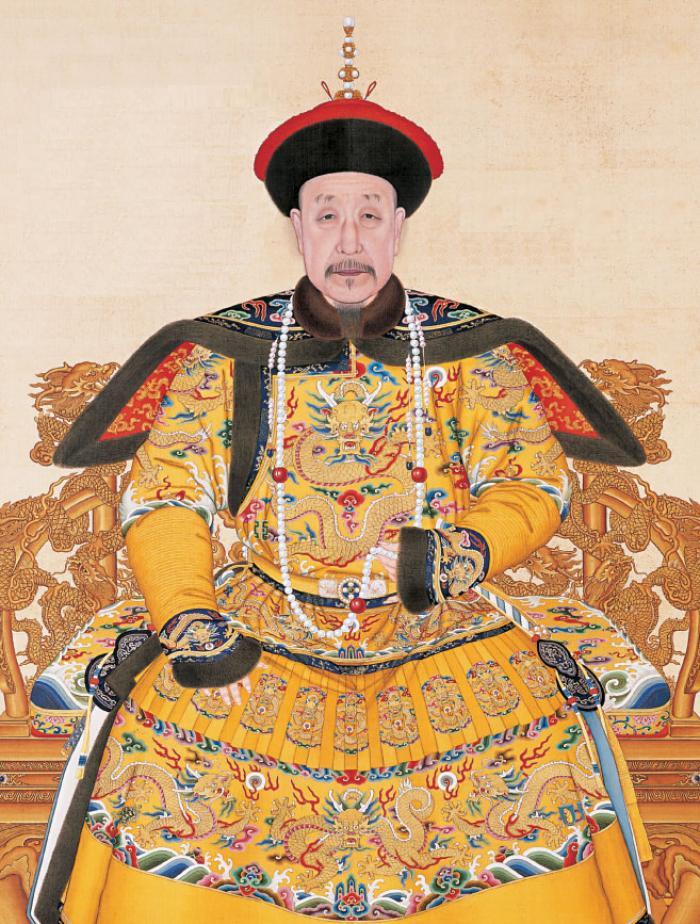 |
| Emperor 乾隆 (Qian Long) |
The plot thickens when the Emperor mistakes Little Swallow for his daughter. The thing that sticks out to me about this story is that while I'm not sure whether the whole 還珠格格 story is fact or fiction, the Emperor 乾隆 is known to be one of the more well-liked Emperors of China. He is portrayed in the story to be a righteous man, but still merciful after he finds out that Little Swallow is not actually his daughter.
Ever since my introduction to Emperor 乾隆, I've had great respect for simply out of my love for ancient Chinese history and culture. To think of my God in that context, except far greater since 乾隆 was human...
Righteousness and mercy got a little more personal today.
I was looking for pictures of a Chinese warrior prince because that's what 差遣 (sent) reminded me of. In one scene, Emperor 乾隆 sends his son on a dangerous mission. I found myself asking the question today, how many times have I read the words, "God sent his son," and went, "Oh yeah, that was the Christmas story. Angels, shepherds, mangers, Mary, Joseph, King Herod and the Wise Men."
But the words 差遣 (sent) made me think of an emperor sending his son on a dangerous mission. That was what "God sent his son" really meant, aye?
| Princess Warrior |
Taking it full-circle, this week's NT passage from Galatians 4 talked about how we are heirs in the kingdom because of adoption. If the Emperor 乾隆 was my imagery for God today, I guess that makes me a sword-wielding martial-arts expert Chinese princess, aye?
And taking it another step further with 差遣 (sent). I'm not just a sword-wielding Chinese princess. Something about missio Dei comes to mind for whatever reason.
(I warned you. Nerdsplosion.)
And then taking it yet another step further, if reading the Bible in one of my other native tongues led to this nerdsplosion, I wonder what it would be like if this contextualization happened for someone else...?


No comments:
Post a Comment