A few days ago, I met Soana, a Tongan lady at a training session for Ignite, the youth camp by WMCNZ that I'm going to be a part of this weekend (assuming I'm still in New Zealand). At the beginning of the session, we were divided into groups, and asked to go around sharing stories of how we came to a relationship with Jesus, and what it is that's keeping that relationship going today.
Soana and I were going to be cabin leaders together, so as the training session was ending with a prayer time together, we had some time to visit and get to know each other better. At one point, she asked, "So, you're Chinese?" And I explained that I was, but I was born in Singapore. Then she said this: "You're so lucky that you can be a Christian. In Tonga, we're all raised as Christians, and we all have to go to church--it is a part of our culture. But when I moved to Auckland two years ago, I started to see that so many of the Tongans here don't follow the ways we were brought up in anymore. They read the Bible, but it's kept separate from their lives, and they don't even go to church anymore. You're lucky you can be a Christian, and still choose to be a Christian."
I've been mulling over that conversation over the last few days. In our Wesleyan-Arminian tradition, we talk a lot about free will. But the danger of only talking about free will is that we can drift off into an unbalanced dialogue that doesn't give consideration that God does ordain some things. That I was born into the land, family and place in society I was born into was definitely God-ordained. There can be no explanation than that (bearing in mind I'm writing this solely through the lenses of a relationship with Christ). But what I choose to do with the circumstances I was born into--that's free will.
In my short stint at WCF, I got to know several youths whom society would not pay any attention to. They weren't achieving enough to get positive attention, but they also weren't quite destructive enough to get just enough negative attention for it to go wrong. As I began to spend more time with these kids, I began to realise more and more that there really aren't "bad" kids, just kids who don't often make the best decisions from time to time. And with many of our kids, they didn't have the privilege of being born into the safe, sheltered circumstances I had. Sure, they had the free-will to make better choices and leave those circumstances behind, but for so many of them, they've not had the adults in their lives to support and encourage their making better choices.
Over the last few months, I've been at the district court a number of times. What breaks my heart most isn't just the number of youths who are summoned to court, but the reality that they are often there alone, represented only by a lawyer that was allocated to them by the district authorities. They often don't have a rapport with the lawyer, and coming from backgrounds of abandonment and trust issues, they have difficult trusting that the lawyers actually do want the best for them.
And then I marvel again, at how privileged I am. Yes, Soana, I am lucky, or blessed, or whatever word you want to use, to have been born into a family where starting and keeping a relationship with Christ was easy. I'm lucky to have been born into a family where it was easy to be a good kid. I'm lucky that even if I didn't have a picture perfect relationship with my birth family, they are at least supportive and encouraging of what I do--especially when it breaks the mold of success defined by finances that Asian societies value so deeply.
It is 6 January today. In exactly a month, I will be turning 28. Last year, as I was turning 27, I wrote that 27 was the year I joined the circus. In case you missed it, I discovered there was a free community circus in town, and I wanted to at least give it a shot. If nothing else, I can check off the bucket list that I was crazy enough to join a community circus for a few weeks. I didn't last in the circus for a variety of reasons; the main one being I hate performing. In uni, my piano professor told me I should switch majors if I hated performing (It only made sense when Chad--who also graduated from AU with a music degree--explained that universities in the States place most of their emphasis on performance, and I felt completely out of place because I loved theory and composition--and choir, but only because of a fantastic choir director). I was really disappointed with myself that I didn't last longer in the circus since I had hyped it up so much for my 27th birthday. But I eventually had to come to terms with simply being ok with who I am, and not placing the expectations on myself to be someone I'm not, and to pretend to love things that I don't.
Greta reminded me last night of something our dear Ann Smith talks about often: the difference between expectation and expectancy. #27 was a year of great expectations, and finding myself miserable when I couldn't keep up with my expectations of myself. As I head into #28, my only expectation of myself is to learn to live with expectancy of whatever it might be that God is going to do this year. As I continue the waiting game for my visa, I'm reminded again that, right from the beginning, New Zealand has been my Isaac. So I'm choosing again to surrender my Isaac at the altar in expectancy of whatever God is going to do with it.
And even though I had been crazy enough last year to set some things in place to publish and get ordained in 2014 (and am currently sitting here with the slightest anxiety over the realisation that 2014 isn't "next year" anymore), there is no expectation to see those things as achievements anymore.
I am enough because I choose to make the best of what I find myself in.
And I am enough because I choose to believe God thinks I'm enough.
Showing posts with label Chinese Roots. Show all posts
Showing posts with label Chinese Roots. Show all posts
06 January 2014


16 December 2013
Stories From The Bridge Part #1 - Christmas at a Ministry House
I first met Nesta about a week ago when Janice, Kathrin and I went to open a new bank account for the National Ministries of the Church of God.
With his, "cool, cool..." and his "sweet as," he sounded as Kiwi as the next bloke on the street. Then today, I found out he's still pretty nervous about his English, albeit less than he was 5 years ago when he first arrived in New Zealand for university. He credits the vast improvement in his language skills to a woman (who just so happened to also be from Singapore!) who was a part of a ministry house community that offered English Bible studies amongst other avenues where he had the opportunity to practise English.
When I told him that if my visa got approved, I would be running a similar ministry house, he said that was definitely needed. "Most students are here by themselves. Thankfully, my dad travelled with me from China and I had an uncle here to help support me. But it can still be lonely. And the people I stayed with in that house, we became really good friends and could help support each other."
When asked if he had plans for Christmas, he said he would have wanted to travel back to China. During his last trip home, he began to realise he needed to be able to make more trips home as he was the only child (thanks to China's one-child policy). But since he only had 2 days off from work, it has become tradition to return to the house he lived in for the last 5 years for their Christmas "family" celebration.
Nesta is only one of many international students in Auckland who was significantly supported by a ministry house. Through the ministry of The Bridge, we hope that we will be able to reach more students. Will you consider supporting our ministry?
Within the US, funds can be sent to:
Global Missions
PO Box 2420
Anderson, IN 46018
(Project number: 42.40411)
In Singapore, contact me or my mum for the account number to transfer funds.
Anywhere else, send us an e-mail at thebridge.akl@gmail.com for bank account information.
Ta muchly. We appreciate you.
With his, "cool, cool..." and his "sweet as," he sounded as Kiwi as the next bloke on the street. Then today, I found out he's still pretty nervous about his English, albeit less than he was 5 years ago when he first arrived in New Zealand for university. He credits the vast improvement in his language skills to a woman (who just so happened to also be from Singapore!) who was a part of a ministry house community that offered English Bible studies amongst other avenues where he had the opportunity to practise English.
When I told him that if my visa got approved, I would be running a similar ministry house, he said that was definitely needed. "Most students are here by themselves. Thankfully, my dad travelled with me from China and I had an uncle here to help support me. But it can still be lonely. And the people I stayed with in that house, we became really good friends and could help support each other."
When asked if he had plans for Christmas, he said he would have wanted to travel back to China. During his last trip home, he began to realise he needed to be able to make more trips home as he was the only child (thanks to China's one-child policy). But since he only had 2 days off from work, it has become tradition to return to the house he lived in for the last 5 years for their Christmas "family" celebration.
Nesta is only one of many international students in Auckland who was significantly supported by a ministry house. Through the ministry of The Bridge, we hope that we will be able to reach more students. Will you consider supporting our ministry?
Within the US, funds can be sent to:
Global Missions
PO Box 2420
Anderson, IN 46018
(Project number: 42.40411)
In Singapore, contact me or my mum for the account number to transfer funds.
Anywhere else, send us an e-mail at thebridge.akl@gmail.com for bank account information.
Ta muchly. We appreciate you.
04 October 2013
The Bridge: Why Me??
Towards the end of my senior year at Anderson University, Ann Smith invited me over for tea one afternoon. If you've not met Ann Smith, she's like the female mix of Gandalf, Dumbledore and Obi-Wan Kenobi, except at least twice as personable, and even more awesome. To say I was awestruck to have tea with her would be an understatement.
But Ann simply wanted to hear my heart. She wanted to know what I would be doing after graduation and how she could pray. At the time, I was concluding a ministry internship where church politics had worn me out, and all I wanted to do was to find a 1-2 year assignment working cross-culturally somewhere before returning to Anderson for seminary. I don't remember how the conversation started, but I found myself telling her about a frustrating conversation I had with God my freshman year.
It was a few weeks into our first semester. Even though the only common language between the three of us were English, I found myself acting as a translator of sorts between a friend from Hong Kong and another from South Korea. It was a classic case of translating bad English to bad English--something I must have mastered growing up in the land of Singlish (another form of bad English mixed with at least two Chinese dialects, Malay and some bits of Tamil). One night, as I was laughing at the ridiculousness of my translator role, I felt this prompting to consider living in China as a missionary after graduation. I remembered thinking God must be crazy. Why would I have had to move halfway across the world only to move back the other way? Wouldn't it have been much shorter if I had simply gone from Singapore to China?
Nothing made sense at the time, but as the years passed, I began to realise if I wouldn't even consider saying yes to moving to China, I wouldn't have been willing to consider moving anywhere. China was slightly more familiar than any other part of the world would have been. It was also the stepping stone for my parents to consider the possibility that I wasn't going to move back to Singapore for a while. It was a lot easier for my dad, a traditional Chinaman, to give his daughter his blessings if she were to move to the "motherland" where our ancestors came from, than to some potato-eating (as opposed to rice-eating) part of the world.
As I shared this part of my story to Ann, she simply smiled and said, "You know, my first call to missions was also to China. To this day, I have lived in Japan and South Korea, but still have not made it to mainland China. I don't know what God is doing with that, but I know there is a reason I'm still passionate about China."
Six years have passed since I graduated from AU. Save from a trip to Canton Province (廣東 or Guang Dong province) in 2009 where our family went to trace our ancestral roots on my dad's side, there still are no signs of me ever moving to China. Instead, I find myself at a cafe in New Zealand, writing this post about why I'm going to help start a ministry to international students in Auckland--most of whom are students who have recently moved here from China for university.
I guess God has a really warped sense of humour.
But Ann simply wanted to hear my heart. She wanted to know what I would be doing after graduation and how she could pray. At the time, I was concluding a ministry internship where church politics had worn me out, and all I wanted to do was to find a 1-2 year assignment working cross-culturally somewhere before returning to Anderson for seminary. I don't remember how the conversation started, but I found myself telling her about a frustrating conversation I had with God my freshman year.
It was a few weeks into our first semester. Even though the only common language between the three of us were English, I found myself acting as a translator of sorts between a friend from Hong Kong and another from South Korea. It was a classic case of translating bad English to bad English--something I must have mastered growing up in the land of Singlish (another form of bad English mixed with at least two Chinese dialects, Malay and some bits of Tamil). One night, as I was laughing at the ridiculousness of my translator role, I felt this prompting to consider living in China as a missionary after graduation. I remembered thinking God must be crazy. Why would I have had to move halfway across the world only to move back the other way? Wouldn't it have been much shorter if I had simply gone from Singapore to China?
Nothing made sense at the time, but as the years passed, I began to realise if I wouldn't even consider saying yes to moving to China, I wouldn't have been willing to consider moving anywhere. China was slightly more familiar than any other part of the world would have been. It was also the stepping stone for my parents to consider the possibility that I wasn't going to move back to Singapore for a while. It was a lot easier for my dad, a traditional Chinaman, to give his daughter his blessings if she were to move to the "motherland" where our ancestors came from, than to some potato-eating (as opposed to rice-eating) part of the world.
As I shared this part of my story to Ann, she simply smiled and said, "You know, my first call to missions was also to China. To this day, I have lived in Japan and South Korea, but still have not made it to mainland China. I don't know what God is doing with that, but I know there is a reason I'm still passionate about China."
Six years have passed since I graduated from AU. Save from a trip to Canton Province (廣東 or Guang Dong province) in 2009 where our family went to trace our ancestral roots on my dad's side, there still are no signs of me ever moving to China. Instead, I find myself at a cafe in New Zealand, writing this post about why I'm going to help start a ministry to international students in Auckland--most of whom are students who have recently moved here from China for university.
I guess God has a really warped sense of humour.
05 November 2012
Culture Shock: Paradigm Shift
I've now spent nearly a third of my life away from my country of birth, and every day I'm even more aware of the things I have yet to learn or re-learn.
Like most days, I fumble over grammar. Is this the right English word to use in this English-speaking country?
Or the cucumber story. I still don't know where to find them in the grocery store in Singapore. Every time I'm back, I have a mild panic attack before I head downstairs to the shops because I wouldn't know where to find the cucumbers.
Or the realisation that I've lived in Western countries for the past 8 years but I still don't know how to make a white sauce.
Today it was the realisation that my cultural biases toward racism surprised even myself. While I was at the store earlier, these two men were yelling rather loudly at each other. It took me a while to realise the store manager, a White man (using "White" here because I couldn't figure out if he had non-European blood as well), had been accused by an Indian man of being racist. These were the bits I caught:
"I'm a customer here. Don't think that just because you're the manager here, you can tell me to come back later."
"I was saying that to the other man."
"Don't think that you're the manager here so you can be racist."
"I don't think you understand what that word means."
It went on for quite a while, but out of fear that someone would end up getting hurt, I quickly got my yoghurt and walked down the next aisle.
That was when I realised that I was feeling sorry for the White man even though I hadn't had the full story. The bits I gathered seem to suggest that he wasn't the one at fault, but again I didn't have the full story.
But it made me realise too, in similar situations of ambiguity, I always end up feeling bad for the White folks. Then I had another mild panic attack. Have I become that kid that thinks of her roots as inferior to the Great White that I should always assume they're right? Or was it something else?
I had a moment of flashback to Freshman year. It was a very vivid scene where I was sitting up in the balcony with the other international kids (cos we're badass like that). Bear in mind these were in my good-girl days where I decided I was going to hang out with the "bad" kids so that I could influence them to be like me and Jesus AKA before the realisation we were all equally bad, just at different things. It was the usual chaos that I tried to tune out, but the Gospel Choir leading the Black History Month celebration was the bigger distraction this time.
Why in the world is it necessary to celebrate Black History Month, asked the kid that grew up in multi-culti Singapore where the worse of racial riots happened in the 1960s, prior to our independence. Why can't everybody just decide they want to get along and do it? I mean, I acknowledge Singapore is small and the history of racial tensions is short compared to the rest of world history. Still, it's been so many years since Dr King's assassination. Aren't people tired of that tension?
It wasn't until much later when someone pointed out the far-reaching effects of slavery that I understood why it was difficult. Reconciliation IS hard work. But reconciliation can't happen while one side hangs their head in shame while the other continues wagging a finger at them. They'll always hear the, "Bad dog. Bad, bad, bad." We know it's not good for kids' self-esteem so we avoid it, but why do we do it elsewhere?
I remembered having the same struggle in Germany. How long are we going to wag fingers at them for the 2 World Wars? Or the Pakeha for not holding up their end of the Treaty of Waitangi?
Maybe it's easy for me to speak since I come from the part of the world that history books would paint as victims of violence rather than perpetrators. Maybe it's because neither of my grandmothers have any stories (or at least, not ones they've told) of being raped by the Japanese soldiers. Maybe it's because I live in such a safe bubble that I don't have any reason to hate the perpetrators of violence. Maybe it's because as I loaded groceries in the van, I caught a reflection of myself--that Asian-looking girl that sounds American but is dressed like a hippie (I know, I know, I'm far from looking anything like a real hippie since I'm still refusing the dreads. But try convincing my ANTM-watching sister of that...) and drives a family van that's only loaded with kids on the rare occasion--and realised anyone meeting me for the first time would have no idea what box to put me in so I feel less judged by either side. Or maybe it's just very simply because I haven't gotten the whole story, or the historical accuracy of the stories.
But really, how long?
And what are WE, as Christians, supposed to do about reconciliation?
I don't know how I would respond if the day should come where I, too, become a victim of violence. I hope someone would look and say, "She responded with the love of Christ," but I also know I'm human.
Kyrie eleison. Christe eleison.
Lord have mercy, Christ have mercy.
Like most days, I fumble over grammar. Is this the right English word to use in this English-speaking country?
Or the cucumber story. I still don't know where to find them in the grocery store in Singapore. Every time I'm back, I have a mild panic attack before I head downstairs to the shops because I wouldn't know where to find the cucumbers.
Or the realisation that I've lived in Western countries for the past 8 years but I still don't know how to make a white sauce.
Today it was the realisation that my cultural biases toward racism surprised even myself. While I was at the store earlier, these two men were yelling rather loudly at each other. It took me a while to realise the store manager, a White man (using "White" here because I couldn't figure out if he had non-European blood as well), had been accused by an Indian man of being racist. These were the bits I caught:
"I'm a customer here. Don't think that just because you're the manager here, you can tell me to come back later."
"I was saying that to the other man."
"Don't think that you're the manager here so you can be racist."
"I don't think you understand what that word means."
It went on for quite a while, but out of fear that someone would end up getting hurt, I quickly got my yoghurt and walked down the next aisle.
That was when I realised that I was feeling sorry for the White man even though I hadn't had the full story. The bits I gathered seem to suggest that he wasn't the one at fault, but again I didn't have the full story.
But it made me realise too, in similar situations of ambiguity, I always end up feeling bad for the White folks. Then I had another mild panic attack. Have I become that kid that thinks of her roots as inferior to the Great White that I should always assume they're right? Or was it something else?
I had a moment of flashback to Freshman year. It was a very vivid scene where I was sitting up in the balcony with the other international kids (cos we're badass like that). Bear in mind these were in my good-girl days where I decided I was going to hang out with the "bad" kids so that I could influence them to be like me and Jesus AKA before the realisation we were all equally bad, just at different things. It was the usual chaos that I tried to tune out, but the Gospel Choir leading the Black History Month celebration was the bigger distraction this time.
Why in the world is it necessary to celebrate Black History Month, asked the kid that grew up in multi-culti Singapore where the worse of racial riots happened in the 1960s, prior to our independence. Why can't everybody just decide they want to get along and do it? I mean, I acknowledge Singapore is small and the history of racial tensions is short compared to the rest of world history. Still, it's been so many years since Dr King's assassination. Aren't people tired of that tension?
It wasn't until much later when someone pointed out the far-reaching effects of slavery that I understood why it was difficult. Reconciliation IS hard work. But reconciliation can't happen while one side hangs their head in shame while the other continues wagging a finger at them. They'll always hear the, "Bad dog. Bad, bad, bad." We know it's not good for kids' self-esteem so we avoid it, but why do we do it elsewhere?
I remembered having the same struggle in Germany. How long are we going to wag fingers at them for the 2 World Wars? Or the Pakeha for not holding up their end of the Treaty of Waitangi?
Maybe it's easy for me to speak since I come from the part of the world that history books would paint as victims of violence rather than perpetrators. Maybe it's because neither of my grandmothers have any stories (or at least, not ones they've told) of being raped by the Japanese soldiers. Maybe it's because I live in such a safe bubble that I don't have any reason to hate the perpetrators of violence. Maybe it's because as I loaded groceries in the van, I caught a reflection of myself--that Asian-looking girl that sounds American but is dressed like a hippie (I know, I know, I'm far from looking anything like a real hippie since I'm still refusing the dreads. But try convincing my ANTM-watching sister of that...) and drives a family van that's only loaded with kids on the rare occasion--and realised anyone meeting me for the first time would have no idea what box to put me in so I feel less judged by either side. Or maybe it's just very simply because I haven't gotten the whole story, or the historical accuracy of the stories.
But really, how long?
And what are WE, as Christians, supposed to do about reconciliation?
I don't know how I would respond if the day should come where I, too, become a victim of violence. I hope someone would look and say, "She responded with the love of Christ," but I also know I'm human.
Kyrie eleison. Christe eleison.
Lord have mercy, Christ have mercy.
03 January 2012
Of Chinese Legends
Ok, let me begin by asking forgiveness for my nerdsplosion in this entry. You were warned.
Even though I grew up speaking two languages (and two other dialects), in my relationship with God, we've only communicated in Chinese on the rare occasion. (Usually that involves God REALLY trying to get my attention).
But to give a little variety to my lectionary readings, I decided this morning I was going to read in Chinese.
Talk about contextualizing.
Even though I'm fluent in both languages, my command of the Chinese vocab is limited to day-to-day communication. Sprinkle in a few spiritual terms and a few of the Chinese classic phrases or idioms and I get thrown for a loop.
Part of the problem is that I only understand the Chinese classic phrases because of the TV shows I watched growing up. Words like 公义 (which translates quite literally as public/community righteousness/justice) as used in Isaiah 61:10, or 差遣 (which means to send on a mission) as used in Galatians 4:4.
It isn't that I didn't understand the words as I was reading. It was more that I hardly read or hear these words outside of the context of the ancient Chinese royal courts as seen in TV shows. Sure, I come across the words "righteousness" and "justice" in theology everyday. But when I read 公义, I think of the Emperor 乾隆 (Qian Long) made famous by the 還珠格格 TV series about the long-lost daughter of Emperor 乾隆 who was born to a peasant whom the Emperor had an affair with on one of his incognito trips out to the country. The story revolves around 紫薇 (the "princess") trying to make her way back to the palace to be reconciled to her father after her mother dies. Along the way, she runs into 小燕子 (a peasant girl called Little Swallow). Because the journey is long and tiring, and 紫薇's body is too weak, she convinces 小燕子 to make the rest of the journey for her to tell the Emperor her story.
The plot thickens when the Emperor mistakes Little Swallow for his daughter. The thing that sticks out to me about this story is that while I'm not sure whether the whole 還珠格格 story is fact or fiction, the Emperor 乾隆 is known to be one of the more well-liked Emperors of China. He is portrayed in the story to be a righteous man, but still merciful after he finds out that Little Swallow is not actually his daughter.
Ever since my introduction to Emperor 乾隆, I've had great respect for simply out of my love for ancient Chinese history and culture. To think of my God in that context, except far greater since 乾隆 was human...
Righteousness and mercy got a little more personal today.
I was looking for pictures of a Chinese warrior prince because that's what 差遣 (sent) reminded me of. In one scene, Emperor 乾隆 sends his son on a dangerous mission. I found myself asking the question today, how many times have I read the words, "God sent his son," and went, "Oh yeah, that was the Christmas story. Angels, shepherds, mangers, Mary, Joseph, King Herod and the Wise Men."
But the words 差遣 (sent) made me think of an emperor sending his son on a dangerous mission. That was what "God sent his son" really meant, aye?
And since I couldn't find a picture of a Chinese warrior prince that I liked, I found a picture of a lady warrior instead. True confession time, I guess, and I'm slightly embarrassed by this one (mostly because it's so stereotyped). I've always wanted to be a sword-wielding, martial-arts expert Chinese princess. The jewelry and even the cosmetics from the ancient martial-arts era have always fascinated me, but even more so, the ability to conceal secret weapons in their garb. A pearl hairpin could just as easily be a murder weapon.
Taking it full-circle, this week's NT passage from Galatians 4 talked about how we are heirs in the kingdom because of adoption. If the Emperor 乾隆 was my imagery for God today, I guess that makes me a sword-wielding martial-arts expert Chinese princess, aye?
And taking it another step further with 差遣 (sent). I'm not just a sword-wielding Chinese princess. Something about missio Dei comes to mind for whatever reason.
(I warned you. Nerdsplosion.)
And then taking it yet another step further, if reading the Bible in one of my other native tongues led to this nerdsplosion, I wonder what it would be like if this contextualization happened for someone else...?
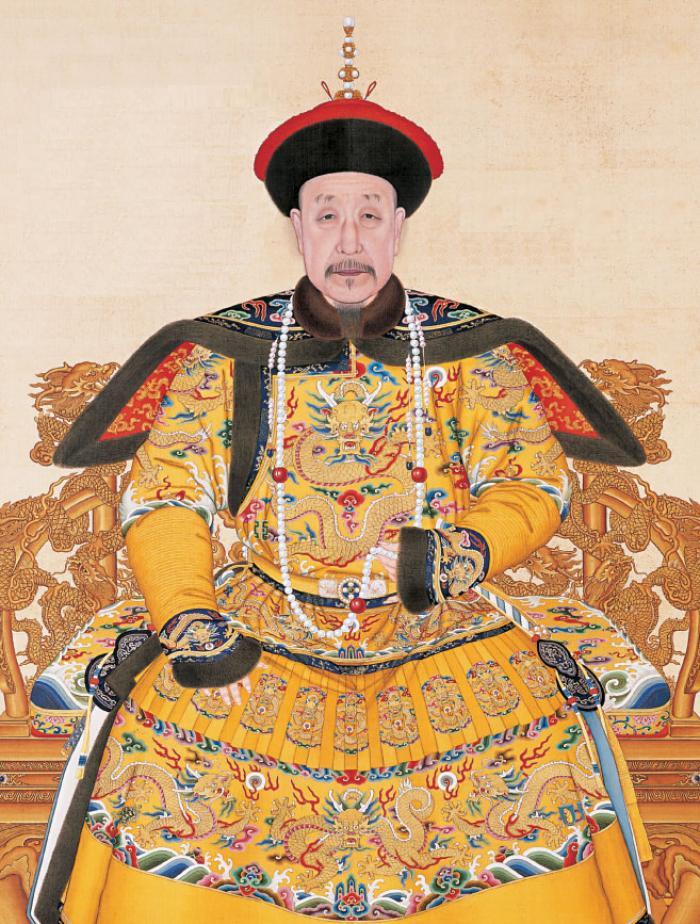 |
| Emperor 乾隆 (Qian Long) |
The plot thickens when the Emperor mistakes Little Swallow for his daughter. The thing that sticks out to me about this story is that while I'm not sure whether the whole 還珠格格 story is fact or fiction, the Emperor 乾隆 is known to be one of the more well-liked Emperors of China. He is portrayed in the story to be a righteous man, but still merciful after he finds out that Little Swallow is not actually his daughter.
Ever since my introduction to Emperor 乾隆, I've had great respect for simply out of my love for ancient Chinese history and culture. To think of my God in that context, except far greater since 乾隆 was human...
Righteousness and mercy got a little more personal today.
I was looking for pictures of a Chinese warrior prince because that's what 差遣 (sent) reminded me of. In one scene, Emperor 乾隆 sends his son on a dangerous mission. I found myself asking the question today, how many times have I read the words, "God sent his son," and went, "Oh yeah, that was the Christmas story. Angels, shepherds, mangers, Mary, Joseph, King Herod and the Wise Men."
But the words 差遣 (sent) made me think of an emperor sending his son on a dangerous mission. That was what "God sent his son" really meant, aye?
| Princess Warrior |
Taking it full-circle, this week's NT passage from Galatians 4 talked about how we are heirs in the kingdom because of adoption. If the Emperor 乾隆 was my imagery for God today, I guess that makes me a sword-wielding martial-arts expert Chinese princess, aye?
And taking it another step further with 差遣 (sent). I'm not just a sword-wielding Chinese princess. Something about missio Dei comes to mind for whatever reason.
(I warned you. Nerdsplosion.)
And then taking it yet another step further, if reading the Bible in one of my other native tongues led to this nerdsplosion, I wonder what it would be like if this contextualization happened for someone else...?
Subscribe to:
Posts (Atom)